As an Amazon Associate, we earn from qualifying purchases.
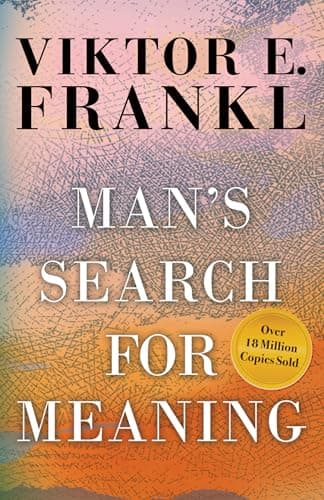
Man's Search for Meaning
Viktor Frankl's landmark account of finding purpose in suffering — one of the most influential books ever written.
Why We Recommend This
- 1
A holocaust survivor's profound testimony on finding meaning in suffering
- 2
Read by millions worldwide — a landmark of 20th-century thought
- 3
Introduces logotherapy: the search for meaning as life's core drive
- 4
Hope-filled even in the darkest circumstances imaginable
- 5
Short, unforgettable, and deeply spiritually resonant
- 6
Reminds us that purpose can survive any hardship
Opens Amazon in a new tab. Prices may vary.
Our Full Review
"Those who have a 'why' to live can bear almost any 'how.'" Viktor Frankl's Man's Search for Meaning is one of the most important books ever written about suffering, hope, and the human spirit — and it speaks straight to the heart of faith.
What Is This Book Really About?
Viktor Frankl was a psychiatrist who survived years in Nazi concentration camps, including Auschwitz. This slim, powerful book is part memoir of that horror and part the foundation of his psychological approach, called logotherapy.
The central insight is staggering in its simplicity: even when everything is stripped away — freedom, family, health, dignity — one freedom remains, the freedom to choose our response. Meaning, Frankl argues, is not handed to us; it is found, even in the midst of unspeakable pain.
For the faith reader, this is sacred territory. Frankl writes as a Jewish thinker wrestling with God in the abyss, and his conclusions echo a deep biblical truth: that suffering need not be meaningless, and that hope can endure when nothing else does. He does not arrive at his hope cheaply or quickly; he earns it in the place where most people would have abandoned hope entirely, and that hard-won quality is precisely what gives the book its enduring authority.
The Core Ideas
Meaning Is the Primary Human Drive
Where some psychologies center on pleasure or power, Frankl saw the search for meaning as the deepest motivation of human life. We are made to live for something beyond ourselves. When that sense of purpose fades, he observed, people unravel; when it is present, they can endure almost anything. It is a conviction that resonates powerfully with a worldview that sees every life as created for purpose.
Suffering Can Be Redemptive
Frankl does not glorify suffering, but he refuses to let it be wasted. When suffering is unavoidable, he writes, the way we bear it can become an achievement — a final, defiant act of dignity.
We Are Free to Choose Our Response
The famous heart of the book: between stimulus and response there is a space, and in that space lies our freedom and our growth. No circumstance can take that inner freedom from us. Frankl witnessed fellow prisoners give away their last crust of bread to comfort another, proof that even in the worst conditions, the choice of how to be human remains.
Three Paths to Meaning
Frankl points to three ways we discover meaning: through meaningful work or creation, through love and connection with others, and through the courageous attitude we take toward unavoidable suffering. Each path is open to anyone, in any season, however constrained their circumstances may be.
Why This Book Works
It was forged in fire. This is not theory written from a comfortable desk. Frankl tested his ideas in the worst conditions humanity has produced — and they held.
It is honest about darkness. Frankl spares the reader nothing of the camps' brutality, which is precisely why his hope rings true rather than naive.
It points beyond the self. Frankl insists meaning is found in service, love, and purpose outside us — a deeply resonant truth for anyone who believes we were made for more than ourselves.
Who Should Read This Book
- You if you're walking through a season of loss, grief, or hardship
- You if you've ever asked whether your pain could possibly have purpose
- You if you want a short read that will reshape how you see your whole life
- You if you care for others who are suffering and long to offer real hope
What We Love About It
- Unflinching honesty: It never minimizes suffering, which makes its hope believable.
- Spiritual depth: Though not a Christian book, it points consistently toward transcendence and meaning beyond the self.
- Timeless brevity: In a couple of short hours of reading, it can change a lifetime of perspective.
- Compassionate wisdom: Frankl writes as a healer, gentle even when describing the unthinkable.
Our Verdict
Man's Search for Meaning is a book we return to again and again. It is not explicitly Christian — Frankl writes from a Jewish and psychological tradition — but it stands as one of the most spiritually nourishing books outside Scripture that we know of. Its core conviction, that meaning and hope can survive any darkness, is one every faith reader will recognize and treasure.
If you are suffering, this book will not hand you easy answers. What it offers is better: companionship in the dark from a man who has been there, and the unshakable assurance that your life can still hold meaning.
When we are no longer able to change a situation, we are challenged to change ourselves.
We recommend it without reservation. Few books are this short and this profound. Read it slowly, and let it do its quiet, holy work.
Man's Search for Meaning
180,000 reviews on Amazon
Same Category