I'm happy. I'm a convenience store worker. That's all.
Biography
About Sayaka Murata
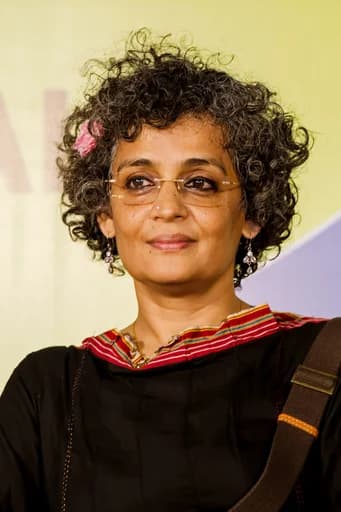
Sayaka Murata (born 1979) is a Japanese author whose novel *Convenience Store Woman* (2016) became an international phenomenon, selling over 660,000 copies in Japan and winning the Akutagawa Prize before being translated into more than 30 languages. Born in Inzai, Chiba, Murata spent years working part-time in convenience stores while writing — the same setting that gives her most famous novel its meticulous texture. Her fiction explores social conformity, alienation, and the violence the "normal" world inflicts on those who cannot or will not perform its rituals.
Her follow-up novel *Earthlings* (2018) pushed these themes toward darker and more surreal territory. She is considered a leading voice of contemporary Japanese literature examining how social expectations crush individuality.
Key Themes
Quick Facts
- Born
- 1979
- Status
- Living
- Age
- 47 yrs
- Quotes
- 5 collected
Wisdom
Sayaka Murata's Famous Quotes
“I'm happy. I'm a convenience store worker. That's all.”
— Convenience Store Woman (2016; English translation 2018)
Keiko, the narrator of Murata's internationally bestselling novel, works in a convenience store for 18 years and feels genuinely at home there — yet everyone around her considers this a failure. The quote captures Murata's central irony: a character who is perfectly content being dismissed as tragic by the society that evaluates her. The novel sold over 660,000 copies in Japan and was translated into 30 languages.
“The normal world has no room for exceptions and always quietly eliminates foreign objects.”
— Convenience Store Woman (2016)
Murata depicts "normal" not as a natural category but as a social enforcement mechanism. The "foreign objects" the world eliminates are people who deviate from expected life scripts — marriage, career ambition, emotional performance. Her protagonist is one such foreign object, and the novel traces the quiet violence of that elimination with clinical detachment that is itself a form of protest.
“I exist in the gaps between the world and myself.”
— Earthlings (2018; English translation 2020)
In Murata's darker follow-up novel, the narrator feels herself to exist outside normal human categories — between the world's expectations and her own inner experience lies a gap that cannot be bridged. Murata's work consistently explores how people who do not fit social scripts experience themselves as ghosts, aliens, or gaps in the fabric of consensus reality.
“People who are considered normal by society are just those who are good at pretending.”
— Convenience Store Woman (2016)
This line is among Murata's most pointed social observations. She describes "normal" people not as authentically natural but as the most skilled performers of conformity. Keiko lacks this skill and therefore reads as deviant — but the gap between her and society is a gap of performance, not of worth. Murata was working in a convenience store herself while writing the novel.
“I wanted to be a normal person, but I realized that for me, normality was a fake mask.”
— Convenience Store Woman (2016)
Keiko, who has never naturally understood social rules, describes her conscious effort to construct a "normal" persona by copying those around her. She mimics expressions, speech patterns, and opinions without feeling them — and the novel asks whether this is so different from what everyone else does. Murata suggests that "normality" is always performance, with most people simply having more practice.
From the Blog
Related Reading
Discover
More Thought Leaders
Need to Know
Frequently Asked Questions
Sayaka Murata (born 1979) is a Japanese author whose novel *Convenience Store Woman* (2016) became an international phenomenon, selling over 660,000 copies in Japan and winning the Akutagawa Prize before being translated into more than 30 languages. Born in Inzai, Chiba, Murata spent years working part-time in convenience stores while writing — the same setting that gives her most famous novel its meticulous texture. Her fiction explores social conformity, alienation, and the violence the "normal" world inflicts on those who cannot or will not perform its rituals. Her follow-up novel *Earthlings* (2018) pushed these themes toward darker and more surreal territory. She is considered a leading voice of contemporary Japanese literature examining how social expectations crush individuality. Sayaka Murata lived b. 1979.
Morning Practice
Continue Your Daily Reflection
Daily faith-based affirmations and quotes from inspiring thinkers like Sayaka Murata.
Free access. New quotes & reflections every day.