Wisdom Hub
Famous Political Leader Quotes & Wisdom
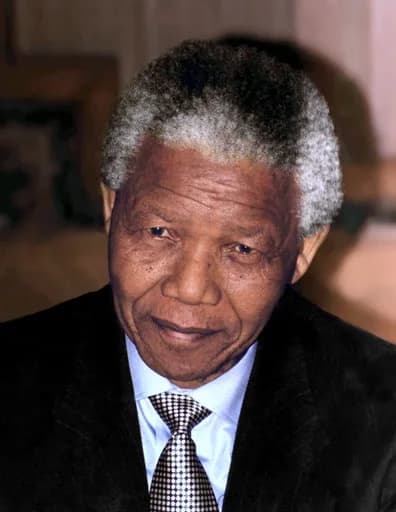
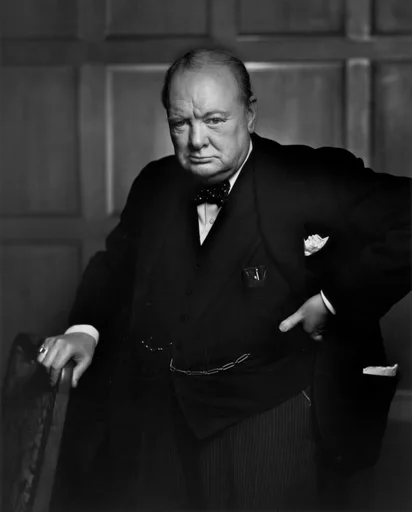
5 political leaders including Nelson Mandela, Aung San Suu Kyi, Winston Churchill.
Featured Quotes
Political Leader Wisdom
“Education is the most powerful weapon which you can use to change the world.”
— Speech at launch of Mindset Network, 2003
Mandela said this at the launch of the Mindset Network, an educational initiative for South Africa. For him, education was never merely academic — it was the instrument that could undo the structural inequalities apartheid had systematically enforced through Bantu Education, which deliberately provided inferior schooling to Black South Africans. He saw literacy and knowledge as the same kind of weapon apartheid had used against people, now turned in their hands.
“Never give in — never, never, never, never, in nothing great or small, large or petty, never give in except to convictions of honour and good sense.”
— Address at Harrow School ("Never Give In"), 1941
Churchill visited Harrow School — where he had been a struggling student 50 years earlier — and delivered this address to boys who were growing up under German bombing. He was correcting the popular misquotation that strips away all qualification: his original command was not absolute stubbornness but the refusal to capitulate except where honour and reason require it. The distinction matters enormously in statecraft.
“The price of greatness is responsibility.”
— Speech at Harvard University ("The Price of Greatness"), 1943
Churchill delivered this at Harvard while accepting an honorary degree, in the middle of the Second World War. He used it to argue that great power obligates great action — that nations and individuals who hold more influence bear a proportional duty to deploy it wisely. It is his counterargument to isolationism: you cannot escape responsibility by refusing to acknowledge the power you already have.
“To improve is to change; to be perfect is to change often.”
— House of Commons speech, 1925
Churchill said this during a debate on Britain''s changing postwar role in the world. It reflects his view that fixed doctrine is the enemy of effective governance — a conviction he lived out by crossing party lines multiple times in his career and reversing positions on tariffs, India, and Germany as facts changed. He considered intellectual rigidity a form of cowardice masquerading as principle.
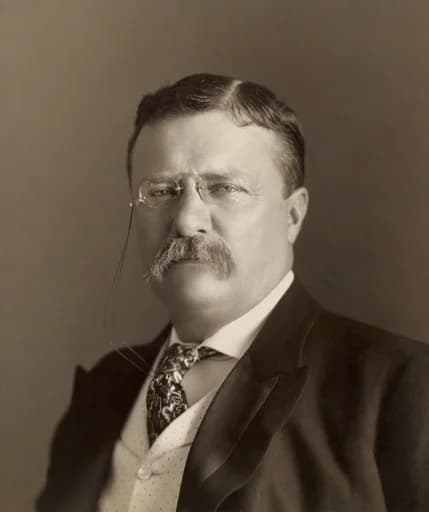
“Speak softly and carry a big stick; you will go far.”
— Letter to Henry L. Sprague, 1900
Roosevelt used this West African proverb in a letter well before his presidency, as a statement of his foreign policy philosophy: negotiate from a position of quiet strength rather than loud threat. His administration would later use this phrase to describe his approach to international diplomacy — winning significant outcomes through backstage negotiation while maintaining a visible deterrent. He avoided declaring war during the Russo-Japanese War negotiations (1904–05) that won him the Nobel Peace Prize.
Voice of the Tradition
I learned that courage was not the absence of fear, but the triumph over it.
Notable Voices
Political Leader Thinkers
Explore