Wisdom Hub
Famous Teacher & Educator Quotes & Wisdom
5 teacher & educators including Chinua Achebe, Dalai Lama, Rabindranath Tagore.
Featured Quotes
Teacher & Educator Wisdom
“When the moon is shining the cripple becomes hungry for a walk.”
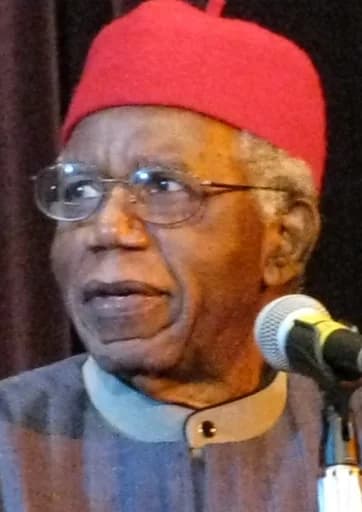
From Achebe's landmark debut novel, this line is a traditional Igbo proverb used to express longing — even a person who cannot walk dreams of movement when beauty appears. Achebe used proverbs extensively throughout the novel to demonstrate the richness of pre-colonial Igbo intellectual culture, countering the Western narrative that Africa lacked civilized tradition.
“Proverbs are the palm oil with which words are eaten.”
One of the most-quoted lines from Achebe's debut, this proverb is used by village elders in the novel to explain why wisdom requires rich language and metaphor rather than bare statement. "Palm oil" was the most valuable commodity in Igbo trade — using it to season words signals that language, like food, must be prepared properly to nourish. The line is also Achebe's artistic credo: form and content are inseparable.
“Love and compassion are necessities, not luxuries. Without them humanity cannot survive.”
— Words of Wisdom: Selected Quotes (ed. Margaret Gee), 2001
The Dalai Lama said this at 54, having spent 30 years in exile from Tibet since the 1959 uprising. His framing — calling compassion a necessity rather than an ideal — was a deliberate challenge to realpolitik: he was arguing to a global audience that the qualities typically considered "soft" are actually the structural prerequisites for civilizational survival. The lecture is one of the defining documents of engaged Buddhism.
“This is my simple religion. There is no need for temples; no need for complicated philosophy. Our own brain, our own heart is our temple; the philosophy is kindness.”
— The Dalai Lama: A Policy of Kindness, 1990
The Dalai Lama says "simple religion" not to diminish religious practice but to cut through theological complexity to its essential purpose. He has made this point to audiences of all faiths: before doctrine, before institution, before ritual, there is the quality of the mind and heart you bring to each moment. The argument is that kindness is not a byproduct of religion but its core.
“Let your life lightly dance on the edges of Time like dew on the tip of a leaf.”
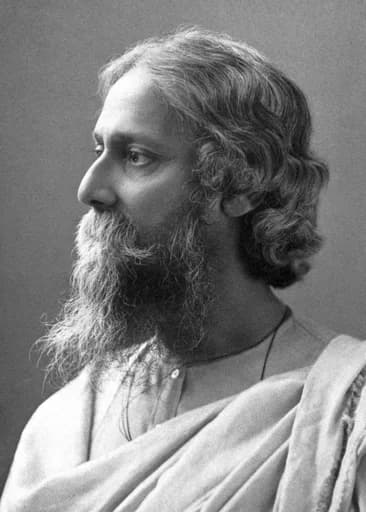
This image captures Tagore''s characteristic aesthetic of lightness: the good life is not heavy, permanent, and monumental but delicate, transient, and fully present in each moment. The dew on a leaf is ephemeral and perfectly placed — it exists exactly as it should for the duration it has, without grasping at more time. This is consistent with his Buddhist-influenced understanding of impermanence as beauty rather than tragedy.
Voice of the Tradition
The world is like a mask dancing. If you want to see it well, you do not stand in one place.
Notable Voices
Teacher & Educator Thinkers

Explore