Things can change in a day.
Biography
About Arundhati Roy
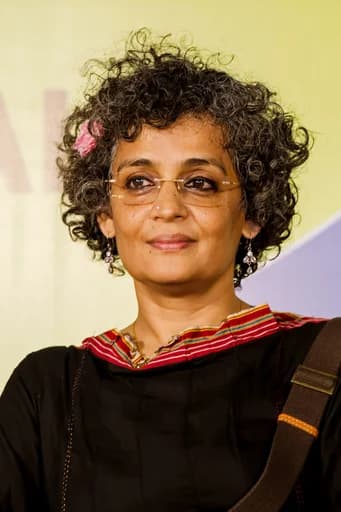
Arundhati Roy (born 1961) is an Indian author and activist whose debut novel *The God of Small Things* (1997) won the Booker Prize and sold more than eight million copies worldwide, making it one of the best-selling novels ever by a non-expatriate Indian author. Born in Shillong and raised in Kerala, Roy trained as an architect before writing her debut. S.
invasions of Afghanistan and Iraq — collected in *The Algebra of Infinite Justice* (2002) and *Listening to Grasshoppers* (2009). Her second novel, *The Ministry of Utmost Happiness* (2017), arrived twenty years after her first. She remains one of India's most fearless public intellectuals.
Key Themes
Quick Facts
- Born
- 1961
- Status
- Living
- Age
- 65 yrs
- Quotes
- 5 collected
Photo: Augustus Binu/ facebook / CC BY-SA 3.0 / Source Resized and converted to WebP from the original.
Wisdom
Arundhati Roy's Famous Quotes
“Things can change in a day.”
— The God of Small Things, 1997
Roy's debut Booker Prize-winning novel begins with this deceptively simple line, spoken as an adult reflects on a single day in 1969 that destroyed her family. The quote encapsulates Roy's central theme: that the entire architecture of a life can pivot on one catastrophic day. It is both warning and consolation — things can change terribly, but also toward the unexpected.
“Another world is not only possible, she is on her way. On a quiet day, I can hear her breathing.”
— Confronting Empire (World Social Forum speech), 2003
Roy delivered this as a rallying cry at the World Social Forum after the U.S. invasion of Iraq, insisting that systemic alternatives to capitalism and militarism were not only possible but already gestating. The personification of "another world" as a she who breathes became one of the most quoted lines in the global justice movement. It demonstrates Roy's ability to combine political argument with poetic image.
“To love. To be loved. To never forget your own insignificance.”
— The End of Imagination, 1998
This triple imperative — to love, to be loved, to remain humble — comes near the end of Roy's novel, offered almost as a private catechism. She argues that love without self-awareness collapses into possession, and that recognizing our smallness in the universe is not defeat but a necessary precondition for genuine connection.
“The only dream worth having is to dream that you will live while you are alive.”
— The End of Imagination, 1998
This line from Roy's novel critiques the half-life of dreams deferred — the desire for safety or approval that leads people to merely exist rather than truly live. It urges full-bodied presence in one's own life rather than a cautious performance of it. Roy herself modeled this philosophy, spending decades between novels as an activist rather than producing comfortable literary output.
“There's really no such thing as the 'voiceless.' There are only the deliberately silenced, or the preferably unheard.”
— Peace & The New Corporate Liberation Theology (Sydney Peace Prize lecture), 2004
Roy delivered this at the Sydney Peace Foundation ceremony, challenging the idea that marginalized communities simply lack a platform. She argues the silencing is deliberate — structural, political, economic — and that naming it as such shifts accountability from the silenced to those who silence. This reframing became foundational in activist discourse on representation and structural violence.
From the Blog
Related Reading
Discover
More Thought Leaders
Need to Know
Frequently Asked Questions
Arundhati Roy (born 1961) is an Indian author and activist whose debut novel *The God of Small Things* (1997) won the Booker Prize and sold more than eight million copies worldwide, making it one of the best-selling novels ever by a non-expatriate Indian author. Born in Shillong and raised in Kerala, Roy trained as an architect before writing her debut. After its success, she turned primarily to political essays — opposing nuclear testing, the Narmada Dam displacement, and the U.S. invasions of Afghanistan and Iraq — collected in *The Algebra of Infinite Justice* (2002) and *Listening to Grasshoppers* (2009). Her second novel, *The Ministry of Utmost Happiness* (2017), arrived twenty years after her first. She remains one of India's most fearless public intellectuals. Arundhati Roy lived b. 1961.
Morning Practice
Continue Your Daily Reflection
Daily faith-based affirmations and quotes from inspiring thinkers like Arundhati Roy.
Free access. New quotes & reflections every day.