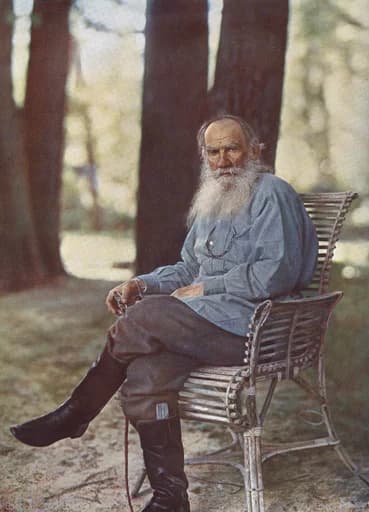
All, everything that I understand, I understand only because I love.
Biography
About Leo Tolstoy
Leo Tolstoy (1828–1910) was a Russian novelist whose two great novels, War and Peace (1869) and Anna Karenina (1877), are widely considered the supreme achievements of realist fiction. Born into Russian aristocracy at the Yasnaya Polyana estate, he served in the Crimean War and published his early fiction before undergoing a profound spiritual crisis in his 50s. He emerged with a new philosophy that he spent the rest of his life practicing: non-resistance, Christian anarchism, and voluntary poverty.
He gave away his literary copyrights, renounced meat and alcohol, and tried (incompletely) to live as a peasant. His later moral writings influenced Gandhi directly — Gandhi cited Tolstoy as a primary influence on his philosophy of nonviolent resistance.
Key Themes
Quick Facts
- Born
- 1828
- Died
- 1910
- Lifespan
- 82 yrs
- Quotes
- 3 collected
Wisdom
Leo Tolstoy's Famous Quotes
“All, everything that I understand, I understand only because I love.”
Pierre Bezukhov, Tolstoy''s philosophical protagonist in War and Peace, arrives at this insight during one of the novel''s quietest moments — not in battle or in philosophical debate but in the simple act of attachment to other people. Tolstoy''s broader argument across the novel is that history is not made by Napoleon''s strategic genius but by the accumulated force of individuals who love specific people and places. Understanding flows from love, not the other way around.
“The two most powerful warriors are patience and time.”
This appears in War and Peace as Field Marshal Kutuzov''s strategic philosophy — the conviction that waiting and patient endurance could defeat Napoleon''s speed and aggression. Tolstoy uses Kutuzov to argue his broader historical theory: that great events are not won by heroic individual action but by the slow, massive force of time working on both sides. The quote has a Stoic flavor, but in context it is specifically about strategic wisdom and the refusal to panic.
“There is no greatness where there is not simplicity, goodness, and truth.”
This is Tolstoy''s explicit critique of Napoleonic greatness — the kind of "greatness" built on complexity, strategy, and the manipulation of others. Against this, the novel consistently celebrates characters like Kutuzov and Natasha who embody simplicity (transparency), goodness (moral directness), and truth (alignment between inner conviction and outer action). The three qualities are not separate virtues but aspects of the same integrated character.
From the Blog
Related Reading
Discover
More Thought Leaders
Need to Know
Frequently Asked Questions
Leo Tolstoy (1828–1910) was a Russian novelist whose two great novels, War and Peace (1869) and Anna Karenina (1877), are widely considered the supreme achievements of realist fiction. Born into Russian aristocracy at the Yasnaya Polyana estate, he served in the Crimean War and published his early fiction before undergoing a profound spiritual crisis in his 50s. He emerged with a new philosophy that he spent the rest of his life practicing: non-resistance, Christian anarchism, and voluntary poverty. He gave away his literary copyrights, renounced meat and alcohol, and tried (incompletely) to live as a peasant. His later moral writings influenced Gandhi directly — Gandhi cited Tolstoy as a primary influence on his philosophy of nonviolent resistance. Leo Tolstoy lived 1828 – 1910.
Morning Practice
Continue Your Daily Reflection
Daily faith-based affirmations and quotes from inspiring thinkers like Leo Tolstoy.
Free access. New quotes & reflections every day.