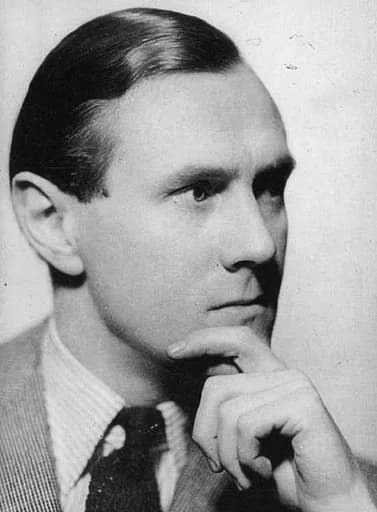
The past is a country from which we have all emigrated.
Biography
About Patrick White
" Born in London to Australian parents and educated at Cheltenham College and Cambridge, he settled in rural New South Wales after World War II with his Greek-Australian partner Manoly Lascaris. His major novels — including *Voss* (1957), *Riders in the Chariot* (1961), *The Solid Mandala* (1966), and *The Eye of the Storm* (1973) — are dense, demanding works that seek the spiritual and mythological beneath the material surface of Australian life. He was openly gay in an era when homosexuality was criminalized in Australia, and used the Nobel Prize money to establish the Patrick White Literary Award for neglected Australian authors.
Key Themes
Quick Facts
- Born
- 1912
- Died
- 1990
- Lifespan
- 78 yrs
- Quotes
- 5 collected
Wisdom
Patrick White's Famous Quotes
“The past is a country from which we have all emigrated.”
— Flaws in the Glass: A Self-Portrait (1981)
From White's acerbic autobiography, this line treats the past as a foreign country one has left — echoing L.P. Hartley's famous opening to *The Go-Between* (1953). White's memoir is unflinching about his Australian childhood, his homosexuality in a repressive era, his fraught relationship with the country that largely dismissed him until his Nobel Prize forced a reassessment. The past he left was not just personal but national.
“To understand oneself is the classic form of consolation; to delude oneself is the romantic.”
— The Twyborn Affair (1979)
White's penultimate novel — about a character who lives across three identities and genders in three different countries — returns constantly to the question of self-knowledge. The protagonist Eddie Twyborn understands himself with painful clarity; society's refusal to accommodate that understanding forces deception. White considered this his most personal novel, having lived as a closeted gay man in Australia for much of his public life.
“The truth has to be made plausible before it is believed.”
— The Vivisector (1970)
White's novel about a painter whose brutal honesty repels everyone around him argues that truth requires an audience willing to be unsettled. Conventional audiences want truth packaged as familiarity; genuinely disturbing truth — about human ugliness, about mortality, about the falseness of social performance — requires making itself plausible by embedding in recognizable detail. White applied this to his own aesthetic: experimental form as truth-delivery mechanism.
“A writer must be true to his temperament.”
— Voss (1957)
White's novel about a German explorer attempting to cross inland Australia in the 1840s is built on the idea that a writer — or any artist — cannot suppress their essential nature to produce conventional work. Voss himself is incapable of social performance; his ruthlessness and visionary intensity are the same quality. White applied this to his own career: he wrote in a style he called "the extraordinary behind the ordinary," and critics often compared his density to late Henry James.
“Life is not always what one wants it to be, but to make the best of it as it is, is the only way of being happy.”
— The Solid Mandala (1966)
White's novel about twin brothers — one intellectual and failed, one simple-minded but spiritually profound — constantly returns to the question of contentment. The character who accepts life's terms without demanding they be otherwise finds happiness unavailable to the brother who continually measures life against his ideas of it. White himself was famously unhappy and difficult, suggesting he knew this truth without being able to apply it.
From the Blog
Related Reading
Discover
More Thought Leaders
Need to Know
Frequently Asked Questions
Patrick White (1912–1990) was an Australian novelist who in 1973 became the first Australian to receive the Nobel Prize in Literature, cited for his "epic and psychological narrative art which has introduced a new continent into literature." Born in London to Australian parents and educated at Cheltenham College and Cambridge, he settled in rural New South Wales after World War II with his Greek-Australian partner Manoly Lascaris. His major novels — including *Voss* (1957), *Riders in the Chariot* (1961), *The Solid Mandala* (1966), and *The Eye of the Storm* (1973) — are dense, demanding works that seek the spiritual and mythological beneath the material surface of Australian life. He was openly gay in an era when homosexuality was criminalized in Australia, and used the Nobel Prize money to establish the Patrick White Literary Award for neglected Australian authors. Patrick White lived 1912 – 1990.
Morning Practice
Continue Your Daily Reflection
Daily faith-based affirmations and quotes from inspiring thinkers like Patrick White.
Free access. New quotes & reflections every day.
