As an Amazon Associate, we earn from qualifying purchases.
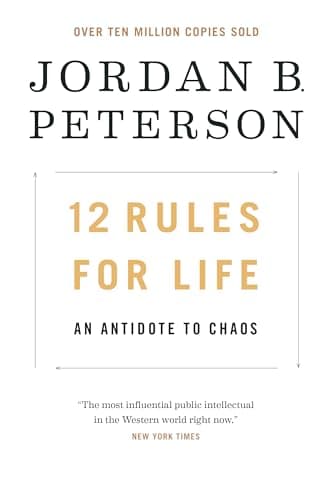
12 Rules for Life
Jordan Peterson's antidote to chaos — practical principles for a meaningful life.
Why We Recommend This
- 1
Jordan Peterson's bestselling "antidote to chaos" in twelve rules
- 2
Blends psychology, mythology, and frequent biblical references
- 3
Calls readers to responsibility, truth-telling, and meaning over comfort
- 4
Intellectually demanding — rewards careful, reflective reading
- 5
Engages Scripture seriously, though from an academic, not devotional, angle
- 6
Read with discernment — a thinking believer's conversation partner
Opens Amazon in a new tab. Prices may vary.
Our Full Review
"Stand up straight with your shoulders back." Peterson's first rule sets the tone for a book about facing life with courage and responsibility.
What Is This Book Really About?
12 Rules for Life: An Antidote to Chaos by Jordan B. Peterson is a sprawling, ambitious book that uses twelve practical rules as doorways into much larger questions about meaning, suffering, order, and chaos. A clinical psychologist by training, Peterson draws on psychology, philosophy, mythology, literature, and — notably — the Bible to argue that a meaningful life is built through responsibility, truth, and the courage to confront hardship.
Each chapter takes a simple-sounding rule ("Tell the truth — or at least don't lie," "Treat yourself like someone you are responsible for helping") and unpacks it across many pages of wide-ranging reflection. The book became a global phenomenon precisely because it spoke seriously to people — especially the young and adrift — who were hungry for direction in a culture that often shrinks from offering any.
For a faith reader, the most striking feature is how seriously Peterson engages Scripture. He treats biblical stories as deep wells of meaning rather than dismissing them. That said, he writes as a psychologist and cultural thinker, not as a believer offering devotion. He reads the Bible largely through a psychological and mythological lens, which makes him a fascinating conversation partner — but not a spiritual authority.
The Spirit of the Rules
Order Against Chaos
A recurring theme is the tension between order and chaos, and the call to find meaning by walking the line between them. Peterson argues that taking responsibility — beginning with your own life, your own room, your own conduct — is how a person pushes back against disorder.
Truth as a Foundation
Several rules orbit around honesty and integrity. Peterson contends that deceit corrodes both the self and society, and that a commitment to truth, even costly truth, is essential to a life worth living — a conviction that resonates with Scripture's high view of truthfulness.
Meaning Over Expedience
Perhaps his central exhortation is to "pursue what is meaningful, not what is expedient." He argues that a life aimed at comfort and pleasure collapses, while a life oriented toward responsibility and meaning can endure suffering with dignity.
Why This Book Works
It takes the reader seriously. Peterson refuses to talk down to his audience. He assumes you can handle big ideas and hard truths, and that respect is part of why the book resonates so widely.
It engages the Bible with genuine weight. For believers used to seeing Scripture dismissed in secular writing, Peterson's earnest wrestling with biblical narratives is refreshing, even when his conclusions differ from orthodox faith.
It champions responsibility. In an age of blame-shifting, the book's insistence that you set your own house in order is both bracing and, properly understood, deeply biblical.
Who Should Read This Book
- You if you enjoy demanding, idea-rich books that make you think
- You if you're drawn to the intersection of psychology, story, and faith
- You if you crave a sober call to responsibility and meaning
- You if you want to understand a hugely influential cultural conversation
- You if you can read with discernment, weighing ideas against Scripture
- You if a young person in your life is searching for direction and grit
What We Love About It
- It treats Scripture as profound, not primitive — rare in mainstream nonfiction.
- It calls readers upward, toward responsibility and courage rather than comfort.
- It's intellectually honest about the reality of suffering and the human capacity for both good and evil.
- It sparks reflection, prompting genuine self-examination about how you live.
Our Verdict
12 Rules for Life is a substantial, thought-provoking book that has resonated with millions for good reason. Its calls to honesty, responsibility, and the pursuit of meaning over mere comfort echo themes Scripture has always held dear, and Peterson's serious engagement with biblical narrative makes him an unusually rich conversation partner for thinking Christians.
But discernment is genuinely needed here. Peterson approaches the Bible as a psychologist and mythologist, mining its stories for archetypal meaning rather than receiving them as the living Word of God. His framework locates salvation, in effect, in the human will to take responsibility — a noble aim, but not the gospel. A faith reader should enjoy his insights while remembering that ultimate hope rests not in our striving toward order, but in the grace of the One who brought order out of chaos in the first place.
Read thoughtfully and critically, this is a stimulating, often inspiring book that can sharpen your thinking and stir you toward a more courageous, responsible life. Approach it as a vigorous dialogue partner rather than a teacher of the faith, and you'll come away challenged in the best ways.
12 Rules for Life
60,000 reviews on Amazon
Same Category