As an Amazon Associate, we earn from qualifying purchases.
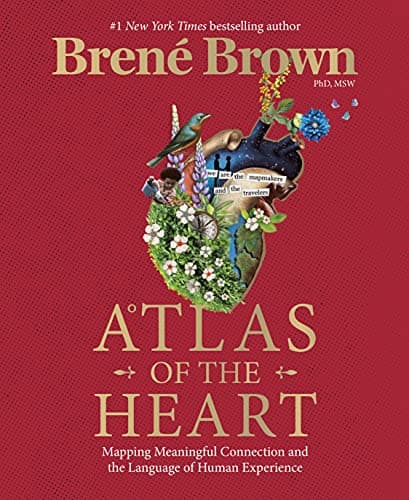
Atlas of the Heart
Brené Brown maps 87 human emotions and experiences that define what it means to be human.
Why We Recommend This
- 1
Maps 87 human emotions with clarity, warmth, and disarming honesty
- 2
From the researcher behind The Gifts of Imperfection and Daring Greatly
- 3
Helps you name what you feel so you can heal it
- 4
Beautifully illustrated, coffee-table quality you'll return to often
- 5
Turns vague feelings into language for prayer and conversation
- 6
A vocabulary for connection, empathy, and meaningful relationships
Opens Amazon in a new tab. Prices may vary.
Our Full Review
"Language is a portal to meaning-making, connection, healing, learning, and self-awareness."
Brené Brown has spent decades studying the tender, courageous interior of human life. In Atlas of the Heart, she turns her attention to something deceptively simple: the words we use to describe what we feel. The result is part field guide, part work of art, and entirely useful for anyone who wants to understand themselves and others more deeply.
What Is This Book Really About?
At its heart, Atlas of the Heart is a map of human emotion. Brown organizes 87 emotions and experiences into groupings — the feelings we have when things are uncertain, when we compare ourselves to others, when we feel wronged, when we open ourselves to others, and more. For each one, she offers a clear definition, drawing on research and her own observations.
The central idea is that we cannot navigate what we cannot name. When we have only a handful of words for our inner life — "good," "bad," "fine," "stressed" — we lose the ability to understand ourselves and to connect honestly with others. Brown argues that emotional vocabulary is not a luxury; it is the foundation of empathy and meaningful relationship.
For a faith reader, this resonates deeply. Scripture is full of the full range of human feeling — the Psalms alone move from despair to praise, lament to trust. To name our emotions honestly is to bring our whole selves before God, as the psalmists did.
The Emotions Worth Mapping
Brown groups the emotions in ways that help us see patterns in our own hearts.
1. The Places We Go When Things Are Uncertain
Stress, overwhelm, anxiety, worry, dread, fear, and vulnerability all live here. Brown helps distinguish between them — anxiety, for instance, is different from fear, and naming the difference changes how we respond. For believers walking through seasons of waiting, this clarity is a gift.
2. The Places We Go With Others
Compassion, empathy, sympathy, boundaries, comparison, and admiration are explored with care. Brown is especially helpful on the difference between empathy and sympathy — a distinction that can transform how we love the people around us.
3. The Places We Go When We Fall Short
Shame, guilt, humiliation, and embarrassment are untangled here. Brown's long research on shame is some of her most valuable work, and it pairs beautifully with the gospel truth that our worth is not earned but given.
4. The Places We Go When We Connect
Love, belonging, trust, and gratitude round out the emotional landscape. These are the feelings that knit us to one another and to God.
Why This Book Works
It's grounded in research, not just opinion. Brown has studied these themes for years, and the definitions she offers feel tested and trustworthy rather than invented on the spot.
It's beautiful to hold and to read. The book is richly illustrated and designed, which makes it the kind of resource you keep on the table and return to rather than read once and shelve.
It gives you words for prayer. When you can name dread, or grief, or longing, you can bring that specific feeling honestly before God instead of offering vague, surface-level prayers.
Who Should Read This Book
- You if you struggle to put words to what you're feeling
- You if you want to grow in empathy toward family, friends, or your church community
- You if you lead others — parents, pastors, teachers, counselors
- You if you've sensed that "I'm fine" has become a wall instead of a window
- You if you want richer language for journaling, prayer, or honest conversation
What We Love About It
- The honesty: Brown writes about hard feelings without flinching, modeling the courage she describes.
- The clarity: Each emotion gets a clean, memorable definition you can actually use.
- The design: It's a pleasure to read, with illustrations that make abstract feelings feel tangible.
- The generosity: Brown shares her own struggles, which makes the book feel like a conversation with a wise friend rather than a lecture.
Our Verdict
Atlas of the Heart is not a Christian book, and Brown writes from a research perspective rather than a theological one. But for the faith reader, it offers something genuinely valuable: a richer vocabulary for the inner life God gave us. The more precisely we can name what stirs within us, the more honestly we can pray, repent, give thanks, and love the people around us.
We'd encourage you to read it slowly, alongside Scripture, letting it sharpen your awareness of your own heart. You may find that naming your emotions becomes an act of bringing them — all of them — into the light of God's presence.
"Search me, O God, and know my heart." The work of self-understanding is, in the end, an invitation to be fully known.
For anyone serious about emotional health and authentic connection, this is a beautiful, useful companion on the journey.
Atlas of the Heart
25,000 reviews on Amazon
Same Category