As an Amazon Associate, we earn from qualifying purchases.
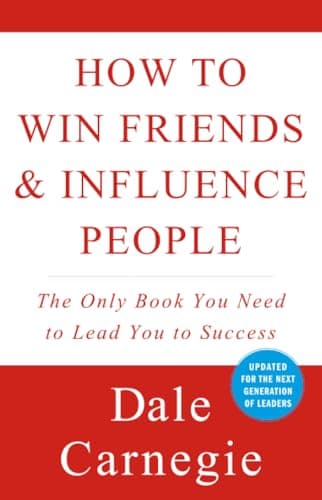
How to Win Friends and Influence People
Dale Carnegie's timeless guide to communication, relationships, and influence.
Why We Recommend This
- 1
The all-time bestselling guide to relating well with people
- 2
Timeless principles on listening, encouragement, and respect
- 3
Make others feel genuinely valued and heard
- 4
Win cooperation without manipulation or pressure
- 5
Practical for marriage, friendship, work, and ministry
- 6
Echoes the wisdom of treating others as you'd want
Opens Amazon in a new tab. Prices may vary.
Our Full Review
The classic that taught millions how to actually care about people — and show it.
What Is This Book Really About?
Dale Carnegie's How to Win Friends and Influence People is among the best-selling books of all time, and nearly a century after its first publication it still tops recommendation lists for anyone wanting to relate better to others. Despite its slightly transactional-sounding title, the heart of the book is surprisingly warm: most of getting along with people comes down to genuine interest, sincere appreciation, and humility.
Carnegie gathers his counsel into memorable principles — become genuinely interested in other people, be a good listener, remember names, make the other person feel important, avoid arguments, admit your own faults quickly. Stated plainly, none of it is revolutionary. Lived consistently, all of it is rare.
For a faith reader, much of this lands as practical commentary on a familiar command: treat others the way you'd want to be treated. Carnegie simply shows you what that looks like in a conversation, a disagreement, or a difficult relationship.
The Core Principles
1. Make People Feel Important
Carnegie's deepest insight is that everyone hungers to feel valued. Sincere appreciation — not flattery — changes the temperature of any relationship.
2. Become Genuinely Interested in Others
Listen more than you speak. Ask questions. People warm to those who are curious about them rather than eager to impress.
3. Win Cooperation, Don't Force It
Arguments rarely change minds. Carnegie shows gentler, more durable ways to bring people alongside you.
4. Lead Without Wounding
When correction is needed, begin with honesty about your own faults and let the other person keep their dignity. Carnegie shows that people will follow correction far more readily when it doesn't cost them their self-respect.
5. Avoid Arguments
One of Carnegie's most counterintuitive lessons is that you almost never "win" an argument — even when you're right, you often lose the relationship. He teaches gentler ways to disagree, to admit when you're wrong quickly, and to let others save face. It's wisdom that defuses tension at home as readily as at work.
Why This Book Works
It's relentlessly practical. Every principle comes with a real-world story you can picture yourself in, which is why the lessons stick long after you've closed the book. You don't just understand the idea — you can see exactly how to use it tomorrow.
It assumes the best of people. The book works because it's built on respect, not tricks — manipulation backfires, while sincerity endures. Carnegie's whole method collapses the moment you try to fake it, which is precisely what keeps it honest.
It improves every relationship. The same skills serve your marriage, your kids, your coworkers, and your church. Few books offer this kind of return across so many areas of life at once.
Who Should Read This Book
- You if conversations and conflict don't come naturally to you.
- You if you lead people — at work, at home, or in ministry.
- You if you want to be a better listener and encourager.
- You if you've been told you can come across as abrupt or distant.
What We Love About It
- Warm at its core: It's really a book about valuing people.
- Endlessly applicable: Marriage, parenting, work, friendship — all of it.
- Story-driven: Principles stick because they're illustrated, not lectured.
- Humble: It calls you to admit faults before correcting others.
Our Verdict
There's a reason this book has stayed in print and atop recommendation lists for so long: it works, and it works because it's fundamentally about respecting and serving people. Read with the right heart, it's not manipulation — it's the practical art of love in action.
Do to others as you would have them do to you.
The one caution we'd offer is to watch your motive. Used to genuinely care for people, these principles bless everyone around you; used merely to get what you want, they curdle into technique. Carnegie himself leans toward sincerity, repeatedly insisting that none of this works if it's faked — follow him there, and let the skills serve love rather than self-interest.
For believers especially, this book is a wonderfully concrete companion to the call to honor others above ourselves and to consider their interests, not only our own. It takes a command we all affirm in principle and shows us what it looks like at the dinner table, in a tense meeting, or in a hard conversation with someone we love. Nearly a century after it first appeared, it remains one of the most useful books you can read on getting along with people — highly recommended, and easy to return to again and again.
How to Win Friends and Influence People
34,000 reviews on Amazon
Same Category