As an Amazon Associate, we earn from qualifying purchases.
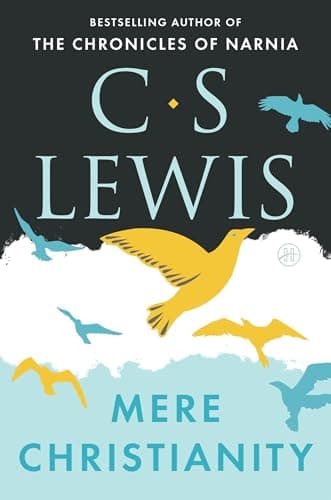
Mere Christianity
C.S. Lewis's classic, rational case for the Christian faith — one of the most-read apologetics ever.
Why We Recommend This
- 1
C.S. Lewis's enduring case for the Christian faith
- 2
Began as wartime BBC radio talks for ordinary listeners
- 3
Reasons toward belief without demanding you start there
- 4
Builds from a moral law to the heart of the gospel
- 5
Clear, conversational prose anyone can follow
- 6
A go-to gift for seekers, skeptics, and new believers
Opens Amazon in a new tab. Prices may vary.
Our Full Review
Few books have helped more people think their way toward faith than this one.
What Is This Book Really About?
Mere Christianity is C.S. Lewis's attempt to explain and defend the beliefs that Christians across centuries and denominations have held in common — the "mere" Christianity beneath the labels. It famously began not as a book but as a series of radio talks Lewis gave over the BBC during the Second World War, when Britain was anxious, weary, and searching. He spoke to ordinary people in plain language, and that warmth still carries through every page.
Rather than starting with the Bible or church authority, Lewis begins where a doubter might: with our shared sense that some things are genuinely right and others genuinely wrong. From that quiet, universal experience he builds, step by step, toward the claims of the Christian story.
The result is less a lecture than a long, generous conversation — the kind you might have with a thoughtful friend who takes both your questions and your faith seriously.
The Core Argument, Step by Step
1. The Moral Law
Lewis opens by noticing that we all appeal to a standard of fairness — even when we break it. This sense of "ought," he argues, points beyond mere instinct or social convention toward something real.
2. What Lies Behind the Law
If there is a moral law, Lewis reasons, it hints at a Lawgiver — a mind behind the universe that is more like a person than a thing. He moves carefully, never overstating his case.
3. The Christian Claim
From there Lewis turns to the heart of the gospel: the person of Christ, the problem of sin, and the surprising remedy of grace. His famous "liar, lunatic, or Lord" reflection lives here.
4. Christian Behavior
The later sections turn practical — forgiveness, pride, charity, hope, and what it actually feels like to be remade over time. Lewis is especially memorable on pride, which he calls the "great sin" — the one vice that pretends to be a virtue and quietly poisons everything else.
5. The New Life
Lewis closes by describing what genuine transformation looks like: not a tidy self-improvement project, but a slow, sometimes painful remaking from the inside out. His image of a house being rebuilt by an architect who has bigger plans than we imagined has stayed with countless readers.
Why This Book Works
It meets you where you actually are. Lewis doesn't assume you already believe. He assumes you're honest, and he reasons alongside you rather than over you. There's no pressure in his voice — only the patient invitation of someone who has thought hard about these things and trusts you to do the same.
It's profound without being heavy. Lewis had a gift for the unforgettable image — a small picture that carries a large idea. You finish a chapter and keep thinking about it on the walk home, turning his analogies over the way you'd worry a smooth stone in your pocket.
It has lasted because it tells the truth plainly. Generations of readers — believers, skeptics, and the simply curious — keep returning to it because it doesn't dodge hard questions. Lewis names the objections you're already thinking and answers them without condescension, which is exactly why the book has outlived nearly all of its contemporaries.
Who Should Read This Book
- You if you're curious about Christianity but wary of being talked down to.
- You if your faith feels inherited and you want to understand why you believe.
- You if you love a writer who reasons clearly and writes beautifully.
- You if you're looking for a thoughtful gift for a seeking friend.
- You if you want a foundation you can revisit for the rest of your life.
What We Love About It
- Timeless clarity: It reads as freshly today as when it first aired.
- Honest on-ramps: Lewis lets doubt sit at the table without panic.
- Memorable images: His analogies stick long after the argument fades.
- Ecumenical heart: It unites rather than divides believers.
- Re-readable depth: You'll find more in it the second and third time.
Our Verdict
More than half a century on, Mere Christianity remains one of the most recommended introductions to the faith ever written — and for good reason. Lewis respects your intelligence, never rushes you, and somehow makes ancient truths feel newly discovered.
"A man can no more diminish God's glory by refusing to worship Him than a lunatic can put out the sun by scribbling the word 'darkness' on the walls of his cell."
If you've ever wanted to understand the reasonableness of Christian belief — or to hand that understanding to someone you love — start here. It's gentle enough for the skeptic and rich enough for the lifelong believer. We can't recommend it highly enough.
Mere Christianity
22,000 reviews on Amazon
Same Category