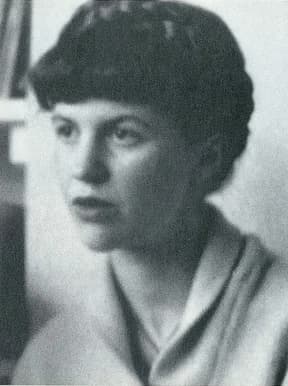
The worst enemy to creativity is self-doubt.
Biography
About Sylvia Plath
Sylvia Plath (1932–1963) was an American poet and novelist, a pioneer of confessional poetry who transformed personal suffering into some of the most technically precise verse of the 20th century. Born in Boston, she graduated summa cum laude from Smith College and won a Fulbright scholarship to Cambridge, where she met and married British poet Ted Hughes. Her semi-autobiographical novel The Bell Jar (1963) and her posthumous poetry collection Ariel (1965) secured her lasting place in literary history.
She died by suicide in London at 30 — six months after the publication of The Bell Jar under a pseudonym. Her unabridged journals, published in 2000, revealed the full scope of her intellectual ambition and creative discipline beneath the public narrative of tragic brilliance.
Key Themes
Quick Facts
- Born
- 1932
- Died
- 1963
- Lifespan
- 31 yrs
- Quotes
- 5 collected
Wisdom
Sylvia Plath's Famous Quotes
“The worst enemy to creativity is self-doubt.”
— The Unabridged Journals of Sylvia Plath, 1982
Plath wrote this in her journal during a period of creative paralysis — she had been comparing her work to that of established male poets and finding it insufficient. Her observation captures a pattern she analyzed with clinical precision: self-doubt does not merely accompany creative failure, it produces it by interrupting the unguarded state in which original work emerges. The Journal''s publication revealed how much of her creative life was a struggle to outrun this exact enemy.
“If you expect nothing from somebody you are never disappointed.”
Esther Greenwood says this with a bitterness that Plath herself felt acutely — as a perfectionist who routinely experienced disappointment when the world failed to meet her standards. The line functions as a protective philosophy, but Plath''s novel complicates it: zero expectations may prevent disappointment but also prevent engagement, connection, and the full vulnerability that makes life meaningful. The novel questions whether the armor is worth the isolation.
“Let me live, love, and say it well in good sentences.”
— The Unabridged Journals of Sylvia Plath, 1982
Plath wrote this as a young writer articulating her artistic credo: that the good life is one expressed through language with full presence. She was obsessed with the quality of her sentences in a way that her journals document obsessively — she measured her days by whether she had written well. The aspiration to "say it well in good sentences" was not aestheticism but her version of living faithfully: giving the truth of experience the language it deserved.
“I took a deep breath and listened to the old brag of my heart. I am, I am, I am.”
This line closes The Bell Jar — Esther Greenwood, recovering from a suicide attempt, listens to her own heartbeat as she prepares to enter the world again. The repetition ("I am, I am, I am") functions as both a pulse and a statement of survival: the barest possible declaration that consciousness persists. Plath wrote it from her own experience of a suicide attempt and recovery, which gives the line its peculiar defiance — not triumph but endurance.
“Is there no way out of the mind?”
— Apprehensions (in Crossing the Water), 1971
This question — appearing in several forms across Plath''s poetry and journals — encapsulates what made her writing so powerful and her life so precarious. She was acutely aware that her mind was both her greatest instrument and the primary source of her suffering. The inability to escape one''s own consciousness is the defining condition of depressive illness, and Plath named it with a precision that has made her work essential to anyone trying to understand that experience from the inside.
From the Blog
Related Reading
Discover
More Thought Leaders

Need to Know
Frequently Asked Questions
Sylvia Plath (1932–1963) was an American poet and novelist, a pioneer of confessional poetry who transformed personal suffering into some of the most technically precise verse of the 20th century. Born in Boston, she graduated summa cum laude from Smith College and won a Fulbright scholarship to Cambridge, where she met and married British poet Ted Hughes. Her semi-autobiographical novel The Bell Jar (1963) and her posthumous poetry collection Ariel (1965) secured her lasting place in literary history. She died by suicide in London at 30 — six months after the publication of The Bell Jar under a pseudonym. Her unabridged journals, published in 2000, revealed the full scope of her intellectual ambition and creative discipline beneath the public narrative of tragic brilliance. Sylvia Plath lived 1932 – 1963.
Morning Practice
Continue Your Daily Reflection
Daily faith-based affirmations and quotes from inspiring thinkers like Sylvia Plath.
Free access. New quotes & reflections every day.