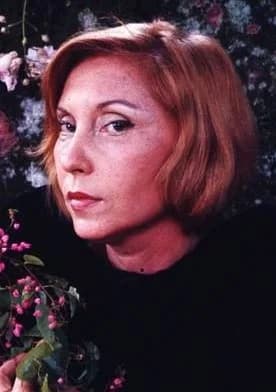
Everything in the world began with a yes.
Biography
About Clarice Lispector
Clarice Lispector (1920–1977) was a Ukrainian-born Brazilian author whose fiction radically transformed 20th-century Portuguese-language literature. Born in Chechelnik, Ukraine (then Russia), she emigrated to Brazil as an infant and grew up in the northeastern city of Recife, raised in poverty after her mother's death. She published her debut novel *Near to the Wild Heart* at 23 while studying law in Rio de Janeiro.
* (1964) and *The Hour of the Star* (1977) — defy conventional narrative in favor of pure consciousness, epiphany, and the raw encounter with existence. She was also a journalist, diplomat's wife, and mother of two.
Key Themes
Quick Facts
- Born
- 1920
- Died
- 1977
- Lifespan
- 57 yrs
- Quotes
- 4 collected
Photo: Bisilliat, Maureen / CC BY-SA 4.0 / Source Resized and converted to WebP from the original.
Wisdom
Clarice Lispector's Famous Quotes
“Everything in the world began with a yes.”
The novel opens with this cosmogonic line: all of existence began with an affirmation, a consent to being. Lispector's narrator experiences an epiphany while contemplating a cockroach, stripping away all social identity until she reaches raw existence itself. The "yes" that begins everything is both metaphysical origin and ongoing act of will — existence must constantly be re-consented to. The Brazilian critic Roberto Schwarz called this her most radical novel.
“I write as if to save somebody's life. Probably my own.”
Lispector — born in Ukraine, raised in Brazil, writing in Portuguese — framed writing as an act of existential survival. Her fiction saved her from madness, she claimed, giving form to experiences that would otherwise be unbearable. She wrote under pseudonym during much of her career, worked as a journalist, raised children alone, and survived a disfiguring fire — all while producing some of the most challenging literature in any language.
“I am afraid to write. It's so dangerous. Anyone who has tried, knows.”
Lispector wrote in a state she called "danger" — a confrontation with the wordless reality beneath language. She believed that truly honest writing required entering a territory where the writer's control dissolves and something more primal speaks. This vulnerability is not metaphor; her manuscripts show extensive revision driven by a sense of inadequacy before experience, not before style.
“I only achieve simplicity with enormous effort.”
In this work of pure experimental prose — a text without plot, characters, or argument, only immediate sensation and consciousness — Lispector reached for a language beyond syntax. "Simplicity" for her meant stripping away every artifice until only truth remained. The paradox is that this demands enormous technical and psychological effort: most "simple" writing is merely careless; genuine simplicity requires mastery surrendering itself.
From the Blog
Related Reading
Discover
More Thought Leaders
Need to Know
Frequently Asked Questions
Clarice Lispector (1920–1977) was a Ukrainian-born Brazilian author whose fiction radically transformed 20th-century Portuguese-language literature. Born in Chechelnik, Ukraine (then Russia), she emigrated to Brazil as an infant and grew up in the northeastern city of Recife, raised in poverty after her mother's death. She published her debut novel *Near to the Wild Heart* at 23 while studying law in Rio de Janeiro. Her major works — including *The Passion According to G.H.* (1964) and *The Hour of the Star* (1977) — defy conventional narrative in favor of pure consciousness, epiphany, and the raw encounter with existence. She was also a journalist, diplomat's wife, and mother of two. Her work, largely overlooked outside Brazil in her lifetime, experienced a massive global reassessment after her death, leading the critic Benjamin Moser to call her "the most important Jewish author since Kafka." Clarice Lispector lived 1920 – 1977.
Morning Practice
Continue Your Daily Reflection
Daily faith-based affirmations and quotes from inspiring thinkers like Clarice Lispector.
Free access. New quotes & reflections every day.