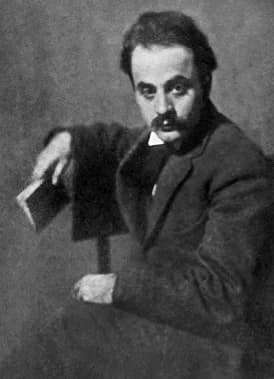
Khalil Gibran
Trust in dreams, for in them is hidden the gate to eternity.
Biography
About Khalil Gibran
Khalil Gibran (1883–1931) was a Lebanese-American poet, artist, and mystic philosopher who became one of the bestselling poets of the 20th century. Born in the Maronite Christian town of Bsharri in Ottoman-controlled Lebanon, he emigrated to Boston at age 12, suffered the deaths of his mother and two siblings from tuberculosis, and eventually settled in New York. His masterwork, The Prophet (1923) — a collection of 26 prose poems delivered by a fictional sage named Almustafa — has never gone out of print and has been translated into more than 100 languages.
Influenced by William Blake, Friedrich Nietzsche, and Sufi mysticism, Gibran's writing sits at the intersection of Eastern philosophy, Christian spirituality, and Romantic idealism.
Key Themes
Quick Facts
- Born
- 1883
- Died
- 1931
- Lifespan
- 48 yrs
- Quotes
- 4 collected
Wisdom
Khalil Gibran's Famous Quotes
“Trust in dreams, for in them is hidden the gate to eternity.”
Gibran wrote in a mystical tradition that treated dreams not as wish-fulfillment but as the soul''s contact with a deeper reality than waking perception can access. The "gate to eternity" suggests dreams are thresholds — not destinations but openings. His writing consistently argued that the invisible world (of spirit, dream, love) is more real than the visible world of commerce and routine.
“Your children are not your children. They are the sons and daughters of Life's longing for itself.”
In The Prophet, Gibran''s fictional sage Almustafa delivers this to parents before departing by ship. The radical claim is that children are not possessions or extensions of the parents'' will but independent souls passing through parents on their way to their own destinies. Gibran''s image of the parent as a "living bow" from which children are sent as "living arrows" remains one of literature''s most quoted passages on the relationship between love and freedom.
“Let there be spaces in your togetherness.”
Gibran''s counsel on marriage is essentially a teaching on love and independence as complementary rather than competing values. "Spaces in your togetherness" does not mean emotional distance but the preservation of individual selfhood within union — the recognition that healthy love requires two whole people, not two halves. The full chapter warns that togetherness without space produces suffocation; separateness without love produces emptiness.
“Work is love made visible.”
In The Prophet, Almustafa calls labor "love made visible" to argue against the separation between vocation and devotion. Gibran believed that work performed without love is a form of death — going through the motions without presence. The full passage asks whether the baker loves his bread, the weaver loves his cloth: if so, the product is infused with the maker''s spirit and becomes a form of communion with those who receive it.
From the Blog
Related Reading
Discover
More Thought Leaders
Need to Know
Frequently Asked Questions
Khalil Gibran (1883–1931) was a Lebanese-American poet, artist, and mystic philosopher who became one of the bestselling poets of the 20th century. Born in the Maronite Christian town of Bsharri in Ottoman-controlled Lebanon, he emigrated to Boston at age 12, suffered the deaths of his mother and two siblings from tuberculosis, and eventually settled in New York. His masterwork, The Prophet (1923) — a collection of 26 prose poems delivered by a fictional sage named Almustafa — has never gone out of print and has been translated into more than 100 languages. Influenced by William Blake, Friedrich Nietzsche, and Sufi mysticism, Gibran's writing sits at the intersection of Eastern philosophy, Christian spirituality, and Romantic idealism. Khalil Gibran lived 1883 – 1931.
Morning Practice
Continue Your Daily Reflection
Daily faith-based affirmations and quotes from inspiring thinkers like Khalil Gibran.
Free access. New quotes & reflections every day.