
Simone de Beauvoir
One is not born, but rather becomes, a woman.
Biography
About Simone de Beauvoir
Simone de Beauvoir (1908–1986) was a French existentialist philosopher, novelist, and feminist theorist whose book The Second Sex (1949) is one of the foundational texts of modern feminism. Born in Paris to a bourgeois family, she graduated from the École Normale Supérieure and taught philosophy alongside Jean-Paul Sartre, with whom she maintained a lifelong open relationship. Her novels — including She Came to Stay (1943) and The Mandarins (1954, Prix Goncourt) — dramatize the existentialist themes she developed in her philosophical essays.
The Second Sex argued that woman is not born but made — a social construction — and that liberation requires economic independence, intellectual engagement, and resistance to the roles patriarchal society assigns. The book was immediately placed on the Vatican's Index of Forbidden Books.
Key Themes
Quick Facts
- Born
- 1908
- Died
- 1986
- Lifespan
- 78 yrs
- Quotes
- 3 collected
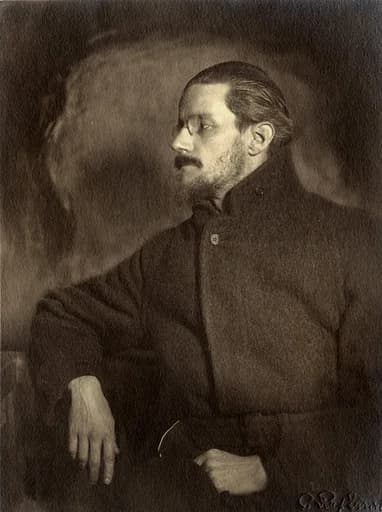
Photo: Moshe Milner / CC BY-SA 3.0 / Source Resized and converted to WebP from the original.
Wisdom
Simone de Beauvoir's Famous Quotes
“One is not born, but rather becomes, a woman.”
This is the most consequential sentence in 20th-century feminist philosophy. De Beauvoir''s argument is that "woman" is not a biological fact but a social construction — something imposed on female bodies through culture, education, and expectation. The word "becomes" is doing enormous philosophical work: it locates gender in process and performance rather than nature. She published this in 1949 and was immediately celebrated and vilified across the world. The argument underlies all subsequent feminist and gender theory.
“Society cares for the individual only so far as he is profitable.”
De Beauvoir argued this in multiple philosophical and political contexts as a critique of both capitalism and liberalism: systems that claim to serve individuals while actually serving productive output. The individual''s value, in this analysis, is instrumental rather than intrinsic — measured by tax contribution, labor output, or consumption. She spent her career insisting on the intrinsic value of human existence that precedes any social utility.
“To catch a husband is an art; to hold him is a job.”
This is de Beauvoir''s sardonic observation on the asymmetry of heterosexual marriage in her era — that capturing a partner requires active charm and strategy, while maintaining the relationship requires sustained domestic labor. She was not endorsing the system but describing it with uncomfortable precision. The Second Sex spent 700 pages documenting exactly how this "job" worked and why it was a trap.
From the Blog
Related Reading
Discover
More Thought Leaders

Need to Know
Frequently Asked Questions
Simone de Beauvoir (1908–1986) was a French existentialist philosopher, novelist, and feminist theorist whose book The Second Sex (1949) is one of the foundational texts of modern feminism. Born in Paris to a bourgeois family, she graduated from the École Normale Supérieure and taught philosophy alongside Jean-Paul Sartre, with whom she maintained a lifelong open relationship. Her novels — including She Came to Stay (1943) and The Mandarins (1954, Prix Goncourt) — dramatize the existentialist themes she developed in her philosophical essays. The Second Sex argued that woman is not born but made — a social construction — and that liberation requires economic independence, intellectual engagement, and resistance to the roles patriarchal society assigns. The book was immediately placed on the Vatican's Index of Forbidden Books. Simone de Beauvoir lived 1908 – 1986.
Morning Practice
Continue Your Daily Reflection
Daily faith-based affirmations and quotes from inspiring thinkers like Simone de Beauvoir.
Free access. New quotes & reflections every day.