Wisdom Hub
Famous Civil Rights Leader Quotes & Wisdom
8 civil rights leaders including Aung San Suu Kyi, James Baldwin, Langston Hughes.
Featured Quotes
Civil Rights Leader Wisdom
“Love takes off the masks that we fear we cannot live without and know we cannot live within.”
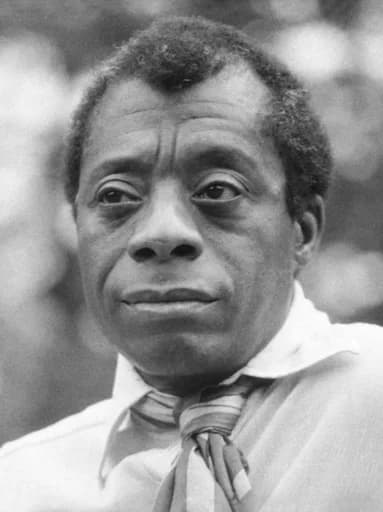
This appears in Baldwin''s landmark essay-letter to his nephew, one of the defining documents of the American Civil Rights era. The "masks" are the protective performances both Black and white Americans had developed to survive a racialized society — and Baldwin argues that love, genuine love, is the act of seeing through and releasing those performances. The paradox — we fear we cannot live without the masks but cannot live within them — captures the precise structure of a prison we build to feel safe.
“You think your pain and your heartbreak are unprecedented in the history of the world, but then you read.”
Baldwin argued throughout his career that literature''s primary function is to break isolation — to give readers proof that their particular anguish has been felt and survived by others. He experienced this himself as a child in Harlem, where books were his first evidence that his interior life was not aberrant but human. The instruction to read is, for Baldwin, not self-improvement but self-rescue.
“Not everything that is faced can be changed, but nothing can be changed until it is faced.”
— As Much Truth as One Can Bear (New York Times Book Review), 1962
Baldwin made this point in many contexts as both a political and psychological observation. In race relations, it expressed his frustration with white Americans who acknowledged injustice in principle but refused to examine their own behavior. More broadly, it is an epistemological claim: real knowledge comes from witnessing conduct, not processing rhetoric. Confronting reality — however uncomfortable — is the precondition for any genuine change.
“What happens to a dream deferred? Does it dry up like a raisin in the sun?”
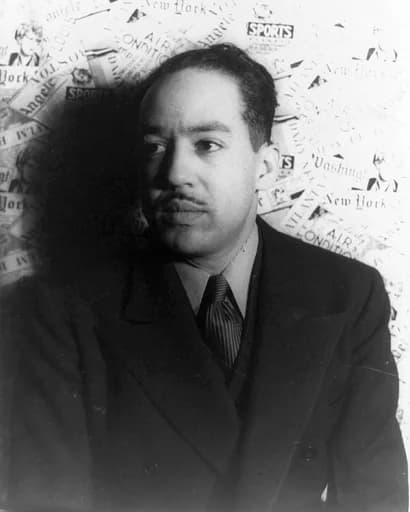
These opening lines of "Harlem" are among the most famous in 20th-century American poetry. Hughes poses the question that the entire poem then answers with five different images of deferred dreams — raisins, festering sores, rotten meat, sugared crusts — culminating in the explosive possibility: "Or does it explode?" Written in 1951, the poem anticipated the Civil Rights eruptions of the 1960s with remarkable precision. Lorraine Hansberry took A Raisin in the Sun directly from this poem''s central image.
“Hold fast to dreams, for if dreams die, life is a broken-winged bird that cannot fly.”
Hughes wrote "Dreams" in 1922 at age 20, during the early surge of the Harlem Renaissance, when Black American artistic life was asserting its legitimacy against a culture that systematically denied it. The broken-winged bird is an image of thwarted vitality — life technically continuing but unable to fulfill its purpose. Hughes spent his career insisting that Black Americans were not only entitled to dream but that those dreams were foundational to American culture itself.
Voice of the Tradition
The place in which I'll fit will not exist until I make it.
Notable Voices
Civil Rights Leader Thinkers
Explore