Wisdom Hub
Famous Poet Quotes & Wisdom
13 poets including James Baldwin, Khalil Gibran, Langston Hughes.
Featured Quotes
Poet Wisdom
“Love takes off the masks that we fear we cannot live without and know we cannot live within.”
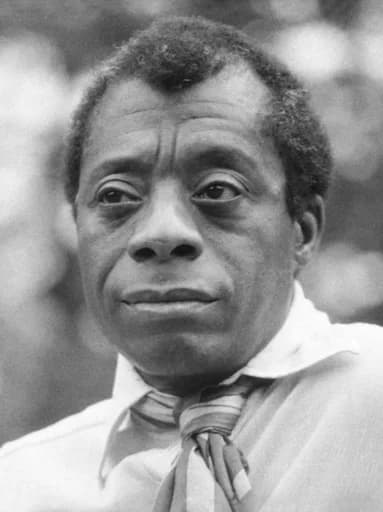
This appears in Baldwin''s landmark essay-letter to his nephew, one of the defining documents of the American Civil Rights era. The "masks" are the protective performances both Black and white Americans had developed to survive a racialized society — and Baldwin argues that love, genuine love, is the act of seeing through and releasing those performances. The paradox — we fear we cannot live without the masks but cannot live within them — captures the precise structure of a prison we build to feel safe.
“You think your pain and your heartbreak are unprecedented in the history of the world, but then you read.”
Baldwin argued throughout his career that literature''s primary function is to break isolation — to give readers proof that their particular anguish has been felt and survived by others. He experienced this himself as a child in Harlem, where books were his first evidence that his interior life was not aberrant but human. The instruction to read is, for Baldwin, not self-improvement but self-rescue.
“Not everything that is faced can be changed, but nothing can be changed until it is faced.”
— As Much Truth as One Can Bear (New York Times Book Review), 1962
Baldwin made this point in many contexts as both a political and psychological observation. In race relations, it expressed his frustration with white Americans who acknowledged injustice in principle but refused to examine their own behavior. More broadly, it is an epistemological claim: real knowledge comes from witnessing conduct, not processing rhetoric. Confronting reality — however uncomfortable — is the precondition for any genuine change.
“Trust in dreams, for in them is hidden the gate to eternity.”
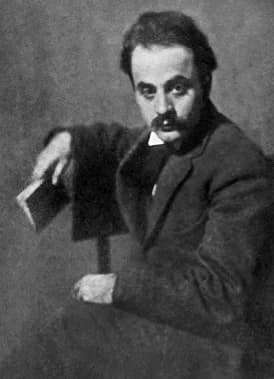
Gibran wrote in a mystical tradition that treated dreams not as wish-fulfillment but as the soul''s contact with a deeper reality than waking perception can access. The "gate to eternity" suggests dreams are thresholds — not destinations but openings. His writing consistently argued that the invisible world (of spirit, dream, love) is more real than the visible world of commerce and routine.
“Your children are not your children. They are the sons and daughters of Life's longing for itself.”
In The Prophet, Gibran''s fictional sage Almustafa delivers this to parents before departing by ship. The radical claim is that children are not possessions or extensions of the parents'' will but independent souls passing through parents on their way to their own destinies. Gibran''s image of the parent as a "living bow" from which children are sent as "living arrows" remains one of literature''s most quoted passages on the relationship between love and freedom.
Voice of the Tradition
The place in which I'll fit will not exist until I make it.

Explore