Skip to content
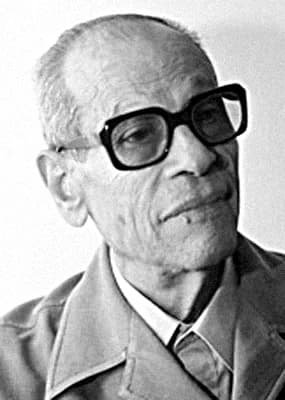
Naguib Mahfouz
inspiration

Naguib Mahfouz

1911 – 2006

5Quotes
5Themes
95Years

About Naguib Mahfouz

Naguib Mahfouz (1911–2006) was an Egyptian novelist who in 1988 became the first Arab writer to receive the Nobel Prize in Literature. Born in the al-Gamaliyya district of old Cairo — the setting of much of his fiction — he worked as a civil servant for decades while writing, publishing his first novels in the 1930s. His masterwork, the Cairo Trilogy (*Palace Walk*, *Palace of Desire*, *Sugar Street*, 1956–57), traced three generations of an Egyptian family from 1917 to 1944, establishing him as Egypt's Balzac.

His later existentialist novels — especially *The Thief and the Dogs* (1961) — and his allegorical novella *Children of the Alley* (1959), which was banned in Egypt for 30 years for perceived blasphemy, showed his range. In 1994 he survived a stabbing attack by an Islamic extremist, suffering permanent nerve damage to his right hand. He dictated rather than wrote for his final decade.

You carry your homeland in your heart.

Naguib Mahfouz

Quick Facts

Born
1911
Died
2006
Lifespan
95 years
Domain
inspiration
Quotes
5 collected
Key Themes
BelongingChangeWisdomStoriesFear

Naguib Mahfouz's Famous Quotes

5 quotes

You carry your homeland in your heart.

The Cairo Trilogy: Sugar Street (1957)

Belonging

Today's friends can be tomorrow's enemies.

Midaq Alley (1947)

Change

You can tell whether a man is clever by his answers. You can tell whether a man is wise by his questions.

Widely attributed to Mahfouz; consistent with his essay and interview positions

Wisdom

Events at home, at work, in the street – these are the bases for a story.

Interview in Al-Ahram newspaper; various sources

Stories

Fear does not prevent death. It prevents life.

Widely attributed to Mahfouz; exact source unverified in his published works

Fear

Explore Related Content

Articles and guides inspired by inspiration thinkers like Naguib Mahfouz

More inspiration

Browse all authors →
Arundhati Roy

Arundhati Roy

Arundhati Roy (born 1961) is an Indian author and activist whose debut novel *The God of Small Things* (1997) won the Booker Prize and sold more than eight million copies worldwide, making it one of the best-selling novels ever by a non-expatriate Indian author. Born in Shillong and raised in Kerala, Roy trained as an architect before writing her debut. After its success, she turned primarily to political essays — opposing nuclear testing, the Narmada Dam displacement, and the U.S. invasions of Afghanistan and Iraq — collected in *The Algebra of Infinite Justice* (2002) and *Listening to Grasshoppers* (2009). Her second novel, *The Ministry of Utmost Happiness* (2017), arrived twenty years after her first. She remains one of India's most fearless public intellectuals.

Mo Yan

Mo Yan

Mo Yan (born 1955) is a Chinese author who received the Nobel Prize in Literature in 2012, cited for his "hallucinatory realism" that "merges folk tales, history and the contemporary." Born Guan Moye in Gaomi, Shandong — a rural area that becomes the setting of much of his fiction — he left school during the Cultural Revolution to work in the fields, then served in the People's Liberation Army. His international reputation was established by *Red Sorghum* (1987), a visceral novel of wartime Shandong that was adapted into a Zhang Yimou film. His subsequent novels — *The Republic of Wine* (1992), *Big Breasts and Wide Hips* (1995), and *Life and Death Are Wearing Me Out* (2006) — blend Chinese folklore, Rabelaisian excess, and political critique. The Nobel Prize generated controversy because of his silence on the imprisonment of Liu Xiaobo, but he remains the most internationally recognized Chinese author.

Eckhart Tolle

Eckhart Tolle

Eckhart Tolle is a renowned spiritual teacher and author, best known for his books "The Power of Now" and "A New Earth." His teachings focus on the importance of presence, mindfulness, and awakening to one's true self. Tolle's work has inspired millions to live more consciously and find peace in the present moment.

Maya Angelou

Maya Angelou

Maya Angelou (1928–2014) was an American poet, memoirist, and civil rights activist whose seven-volume autobiography, beginning with I Know Why the Caged Bird Sings (1969), transformed American literature. Born Marguerite Annie Johnson in St. Louis, Missouri, she endured a childhood marked by racial segregation, sexual trauma, and years of voluntary muteness. She became a dancer, singer, actress, journalist, playwright, and eventually one of the most celebrated poets in American history. In 1993 she delivered her poem "On the Pulse of Morning" at President Bill Clinton's inauguration. She received the Presidential Medal of Freedom in 2011. Her work is inseparable from the Civil Rights Movement — she was a close friend and collaborator of both Malcolm X and Martin Luther King Jr.

Frequently Asked Questions

Naguib Mahfouz (1911–2006) was an Egyptian novelist who in 1988 became the first Arab writer to receive the Nobel Prize in Literature. Born in the al-Gamaliyya district of old Cairo — the setting of much of his fiction — he worked as a civil servant for decades while writing, publishing his first novels in the 1930s. His masterwork, the Cairo Trilogy (*Palace Walk*, *Palace of Desire*, *Sugar Street*, 1956–57), traced three generations of an Egyptian family from 1917 to 1944, establishing him as Egypt's Balzac. His later existentialist novels — especially *The Thief and the Dogs* (1961) — and his allegorical novella *Children of the Alley* (1959), which was banned in Egypt for 30 years for perceived blasphemy, showed his range. In 1994 he survived a stabbing attack by an Islamic extremist, suffering permanent nerve damage to his right hand. He dictated rather than wrote for his final decade. Naguib Mahfouz lived 1911 – 2006.

Naguib Mahfouz Quotes & Biography (1911–2006) | Motivational Inspiration